
Winter camping tips
When the temperatures go below freezing, that doesn’t mean you have to hang up your tent. Winter camping can be one of the most rewarding ways to experience the outdoors. With the right gear - and proper trail food to keep you fuelled - you can stay warm and comfortable even in freezing temperatures. Here are our top winter camping tips that will help you prepare, enjoy and stay safe in cold conditions.
1. How to Choose the Best Winter Camping Pitch
When setting up camp during winter camping trips, choose a spot that’s not in the direction of the prevailing wind and is fairly sheltered - hedges, bushes and walls can help here. Make sure it’s near a water source if possible and not in any avalanche zones. And if you’re camping in snow, you’ll need to flatten it first with snowshoes or boots, otherwise your tent will sink straight into the fluffy stuff.
2. How to Pitch a Tent in the Winter
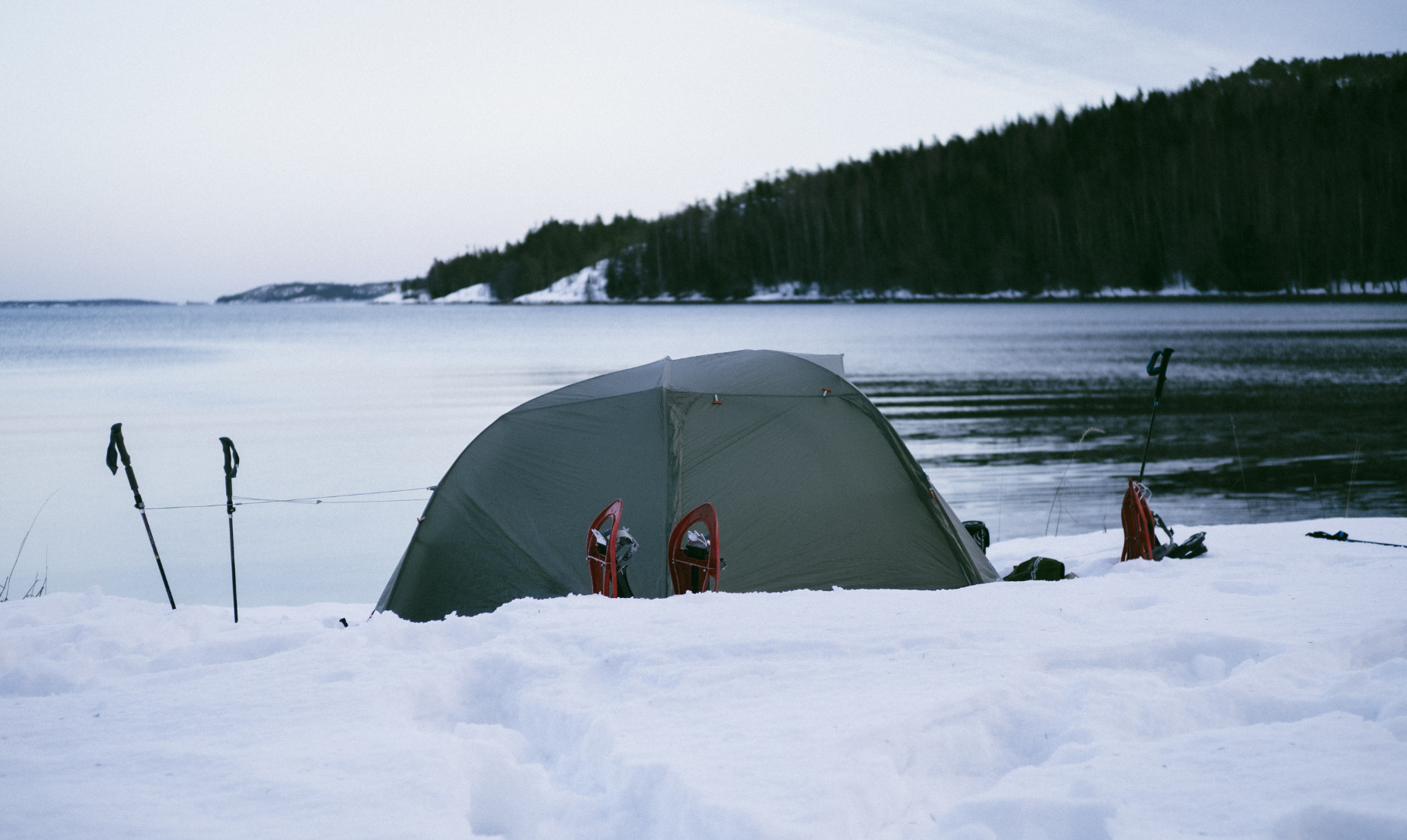
Choosing the right tent stakes is an essential part of your winter camping checklist. Depending on the kind of terrain you’re camping in, you might find that your normal stakes might not work. If the ground is frozen, you might need to go for a freestanding tent and use rocks and trees to keep guy ropes tight. And if you’re in the snow, you’ll either need to use snow stakes, or get creative with your hiking sticks and snowshoes.

3. Winter Sleeping systems: Sleeping mats and R-value Explained
Staying warm from the ground up is one of the most important parts of how to stay comfortable when camping in winter. The ground can stay pretty cold, especially if it’s freezing or you’re camping in the snow, so your sleeping pad will make the biggest difference to how warm you stay at night. Choose an inflatable pad with the highest R-value rating - how well the mat will insulate you against cold ground - you can find, and if possible bring a second closed-cell or foam pad to go underneath.
4. How to Stay Warm at Night When Winter Camping
A properly rated winter sleeping bag is your friend on those cold nights. Shove dry clothes, socks and gloves to the bottom of your bag, and keep your battery packs, phone and camera batteries with you while you sleep to help them hold their charge. And if you have a Nalgene, you can fill it full of hot water, shove it in your sleeping bag for a hot water bottle, and that water should be ready to boil for your morning coffee.


5. What to Wear When Camping in Winter
Layering properly is one of the most important cold weather camping tips. In winter conditions, sweat is your enemy. Once your clothes are wet, it’s really hard to dry them out and you’ll feel much colder. Aim for being 'comfortably cold' while hiking or cycling, and layer up when you stop to keep your temperature up. Use merino and wool base layers for their unbeatable moisture-wicking properties, and add down jackets on top.
6. Hot Meals Matter When Winter Camping
When you’re camping in winter, staying warm isn’t just about down jackets, thick sleeping bags and the most insulated sleeping pads. Eating regular, high-calorie nutritious meals helps your body maintain energy, generate heat in cold conditions and recover after being outdoors. Choose healthy, lightweight, dehydrated trail meals made with real ingredients to give you the fuel you need for your winter adventures.